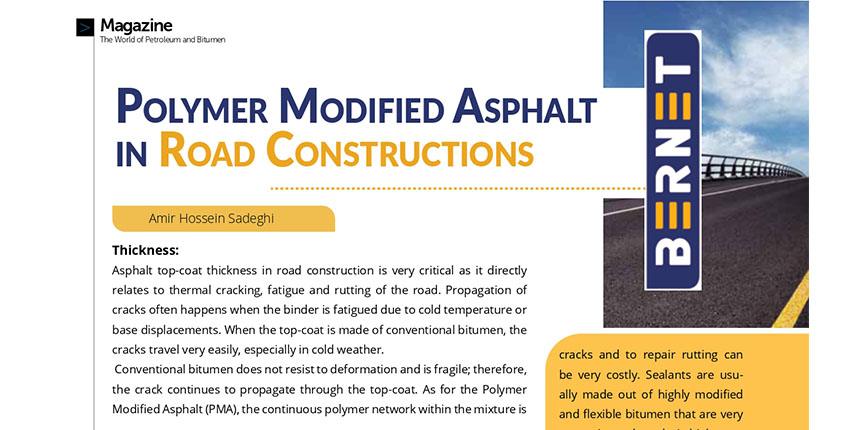
Polymer Modified Asphalt in Road Construction
Why Modified Bitumen is Transforming Modern Pavement Performance
Introduction
Road infrastructure is expected to withstand increasing traffic volumes, extreme weather conditions, and long service life requirements. Traditional paving grade bitumen often struggles to meet these demands, particularly in regions exposed to large temperature variations and heavy traffic loads.
Polymer Modified Asphalt (PMA), produced using Polymer Modified Bitumen (PMB), has emerged as a high performance solution that significantly improves pavement durability, flexibility, and resistance to deformation. By incorporating polymers into the bitumen structure, engineers can design asphalt pavements capable of delivering superior performance throughout their lifecycle.
Improved Pavement Thickness Efficiency
The thickness of the asphalt wearing course plays a critical role in pavement performance. In conventional asphalt mixtures, thermal cracking, fatigue cracking, and rutting are common issues that often require thicker pavement structures to compensate for material limitations.
Polymer Modified Asphalt offers enhanced elasticity and load-bearing capacity due to the continuous polymer network within the binder. This improved performance allows road designers to achieve comparable or superior results with reduced asphalt layer thickness.
Typical design guidelines suggest:
- Conventional Asphalt: 6–8 cm wearing course
- Polymer Modified Asphalt: 5–7 cm wearing course
The reduction in material consumption can contribute to lower construction costs while maintaining long term pavement performance.
Enhanced Resistance to Cracking and Rutting
One of the primary causes of pavement deterioration is crack propagation. Conventional bitumen becomes increasingly brittle at low temperatures, allowing cracks to spread rapidly through the pavement structure.
Polymer modification significantly improves flexibility and elastic recovery, enabling the asphalt to absorb stresses generated by temperature fluctuations and traffic loads. As a result:
- Thermal cracking is reduced
- Fatigue resistance is improved
- Rutting resistance increases under heavy traffic
- Pavement deformation is minimized
This makes PMA particularly suitable for highways, urban roads, and industrial transportation corridors.
Longer Service Life and Aging Resistance
Ultraviolet radiation, oxidation, and environmental exposure gradually age conventional bitumen, reducing its flexibility and performance.
Polymer Modified Asphalt demonstrates superior resistance to oxidation and UV degradation. The polymer network helps maintain binder properties over time, extending pavement service life and reducing the frequency of major rehabilitation works.
Depending on traffic conditions and binder formulation, pavements constructed with modified bitumen can achieve service lives up to two to three times longer than those built with conventional asphalt.
Reduced Maintenance Costs
Road maintenance activities such as crack sealing, pothole repairs, and rut correction represent a significant portion of infrastructure budgets.
Because Polymer Modified Asphalt is more resistant to distress mechanisms, maintenance interventions are required less frequently. Although the initial investment may be higher than conventional asphalt, the reduced maintenance requirements often result in a substantially lower lifecycle cost.
Long-term studies have consistently demonstrated that modified asphalt pavements provide greater economic value over their operational lifespan.
Improved Performance Across Temperature Extremes
Modern pavements must perform reliably in both high temperature and low-temperature environments.
Polymer Modified Asphalt offers:
- Higher softening point for improved high-temperature stability
- Better flexibility at low temperatures
- Enhanced resistance to thermal stress
- Reduced risk of Fraass breaking point failures
These characteristics allow PMA to perform effectively across a wide range of climatic conditions, making it an ideal choice for regions with significant seasonal temperature variations.
Safety Benefits
Road safety remains one of the most important objectives in pavement engineering.
The improved durability of Polymer Modified Asphalt helps maintain pavement integrity by reducing the formation of cracks, potholes, and surface deformations. With proper maintenance practices, pavements constructed using modified binders can provide:
- Better surface condition
- Improved driving comfort
- Reduced risk associated with pavement distress
- Enhanced long term skid resistance
These factors contribute to a safer driving environment for road users.
Reduced Traffic and Cabin Noise
Vehicle road interaction is a major source of traffic noise. Several studies have shown that the improved elasticity and flexibility of Polymer Modified Asphalt can contribute to lower noise generation compared to conventional pavements.
Research indicates that asphalt surfaces incorporating modified binders may reduce in vehicle cabin noise by up to 4 dB under comparable traffic conditions.
This improvement enhances driving comfort while contributing to quieter transportation corridors.
The Role of Performance Graded (PG) Bitumen
The Performance Grade (PG) system, developed under the Superpave framework, evaluates asphalt binders based on their performance under specific climatic and loading conditions.
Many PG binders require polymer modification to achieve the desired resistance to rutting, fatigue cracking, and thermal cracking. As a result, modified bitumen plays a crucial role in the production of high performance PG asphalt binders used worldwide.
Applications Beyond Road Construction
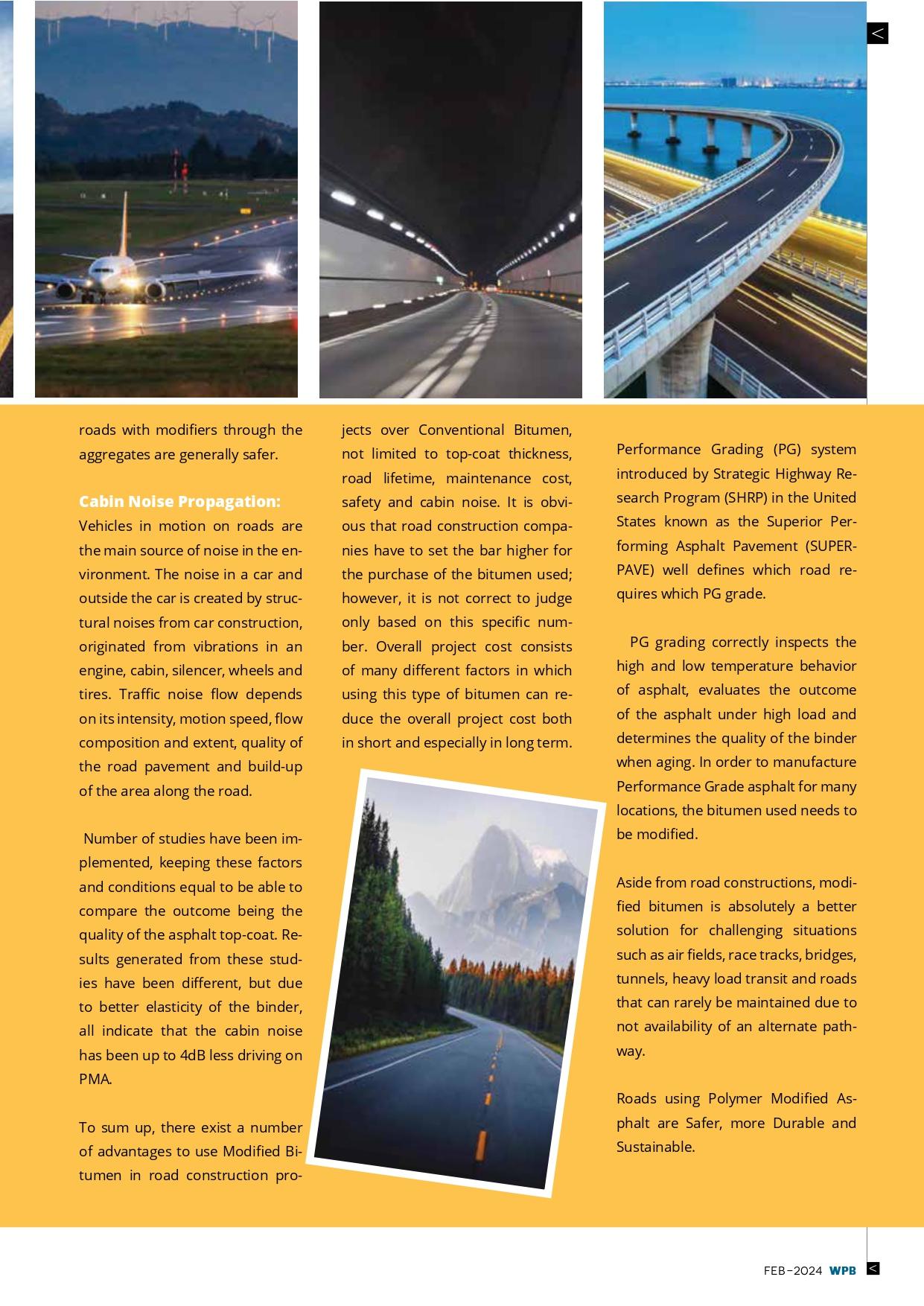
The advantages of Polymer Modified Asphalt extend beyond highways and urban roads. Modified binders are widely used in:
- Airport runways
- Bridge decks
- Tunnels
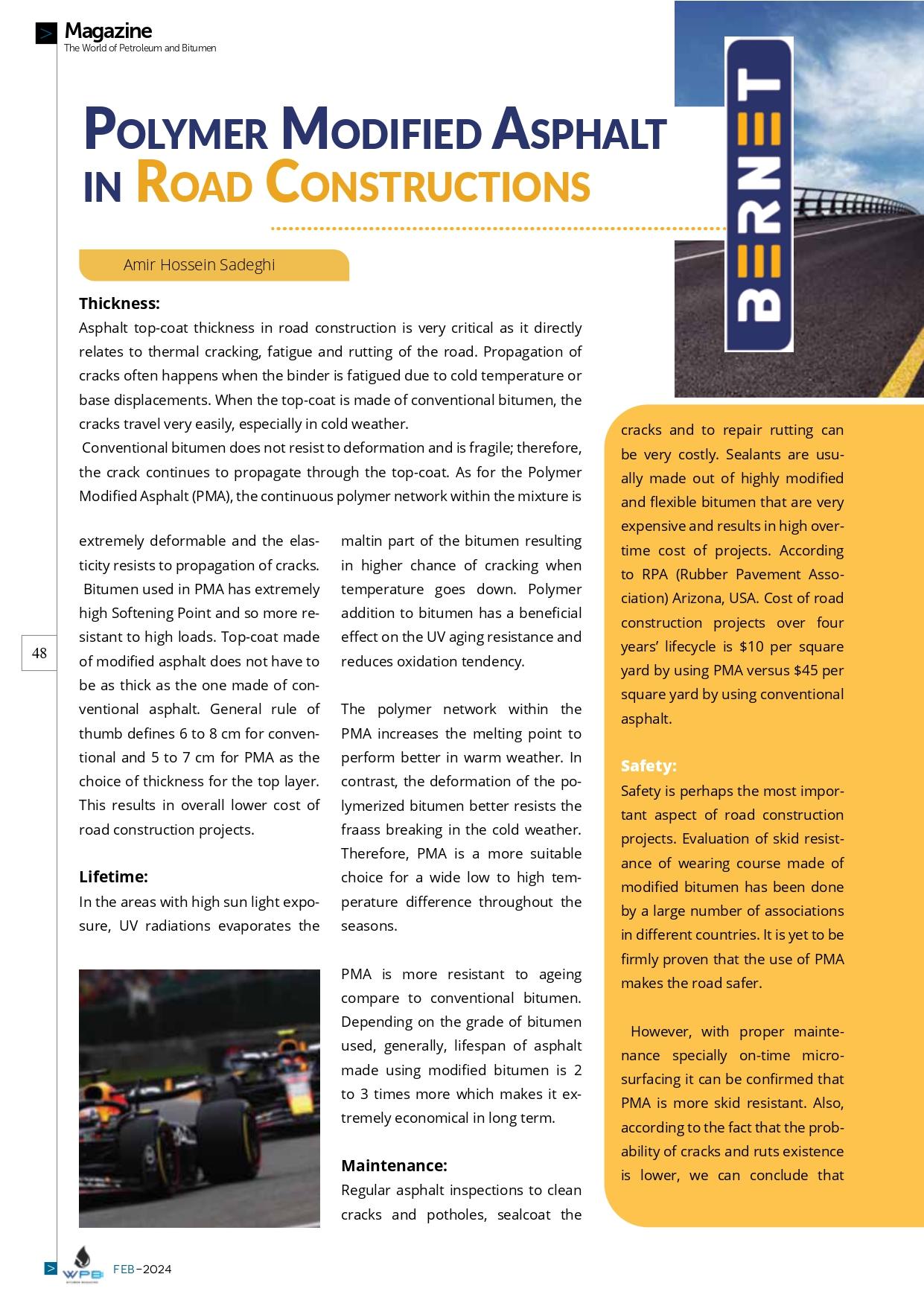
- Racing circuits
- Heavy load industrial roads
- Ports and logistics facilities
These demanding environments require exceptional durability and resistance to mechanical stress, making polymer modification an essential technology.
Conclusion
Polymer Modified Asphalt has become a cornerstone of modern pavement engineering. By improving flexibility, rutting resistance, crack resistance, aging performance, and lifecycle economics, PMA provides a sustainable solution for infrastructure projects requiring long term reliability.
Although the initial material cost may be higher than conventional asphalt, the benefits gained through extended service life, reduced maintenance, improved safety, and enhanced performance make Polymer Modified Asphalt a cost effective investment for road authorities and contractors worldwide.