What Is Polymer Waterproofing? Understanding Its Advantages Over Traditional Building Insulation Methods
Why Is Building Waterproofing Important?
Moisture penetration is one of the most common challenges in building construction. Over time, water infiltration can damage structural elements, deteriorate interior finishes, cause dampness, and reduce the durability of construction materials.
Roofs, bathrooms, basement walls, and foundations are among the building areas that require effective protection against water penetration.
Although traditional methods such as bitumen felt and torch applied membranes have been widely used for decades, advances in polymer technology have introduced a new generation of waterproofing materials. These products are developed to improve flexibility, adhesion, and application efficiency.
One of these technologies is liquid waterproofing based on SBS polymer modified bitumen.
1. What Is Polymer Waterproofing?
Polymer waterproofing materials are formulated using polymer compounds to enhance the physical and performance properties of waterproofing systems.
In these products, Styrene Butadiene Styrene (SBS) polymer helps improve flexibility and elasticity.
These properties are particularly important because building surfaces may experience movement caused by temperature fluctuations, expansion, contraction, and environmental stresses.
Liquid polymer waterproofing products can form continuous protective coatings, helping cover different surfaces and construction details.
2. Traditional Waterproofing vs. Polymer Waterproofing
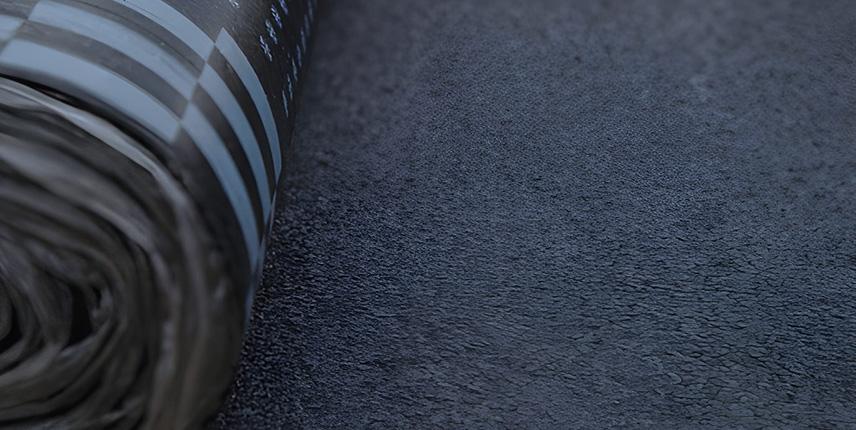
One of the main challenges associated with traditional waterproofing methods is ensuring proper joints, overlaps, and corner detailing.
In systems such as bitumen membranes, installation quality and the sealing of membrane joints play an important role in overall waterproofing performance.
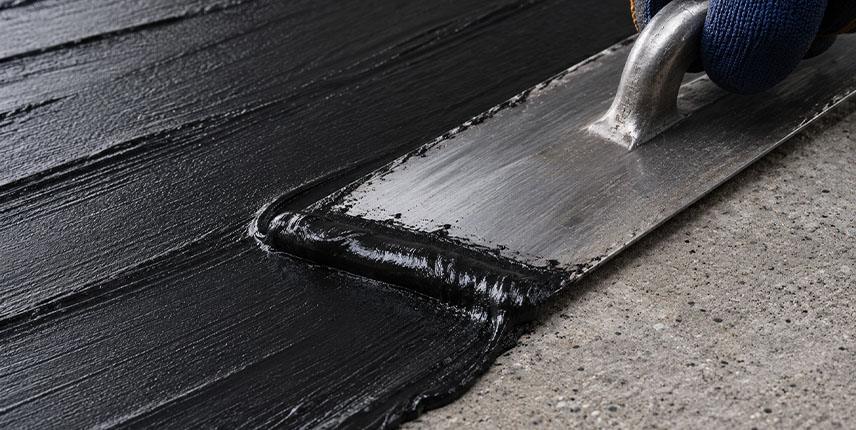
In contrast, cold applied liquid waterproofing materials are applied directly to the surface and form a continuous coating after drying.
The main differences include:
- Application Method: Sheet membranes are installed in separate layers, whereas liquid waterproofing materials are applied using brushes, rollers, or trowels.
- Heat Requirements: Some traditional membrane systems require torch application, while cold-applied products do not require heating during application.
- Detail Coverage: Liquid materials can be applied directly to corners, joints, and surfaces with complex construction details.
- Final Structure: Once cured or dried, liquid applied products form a continuous, seamless coating.
The most suitable waterproofing method should always be selected based on project requirements, substrate conditions, technical specifications, and cost considerations.
3. Why Does Flexibility Matter in Waterproofing?
One of the key factors influencing waterproofing performance is the material’s ability to accommodate movement in the underlying surface.
Temperature fluctuations can cause construction materials to expand and contract. If a waterproofing layer lacks sufficient flexibility, cracks or loss of coating continuity may occur.
SBS polymer improves the elastic properties of bitumen, contributing to greater flexibility and elongation.
Therefore, selecting a waterproofing material should involve more than evaluating its resistance to water. Properties such as elongation, elastic recovery, adhesion, and temperature resistance should also be considered.
4. Where Can Polymer Waterproofing Be Used?
Depending on their technical specifications and application requirements, polymer waterproofing materials can be used in different areas of buildings.
Roof Waterproofing
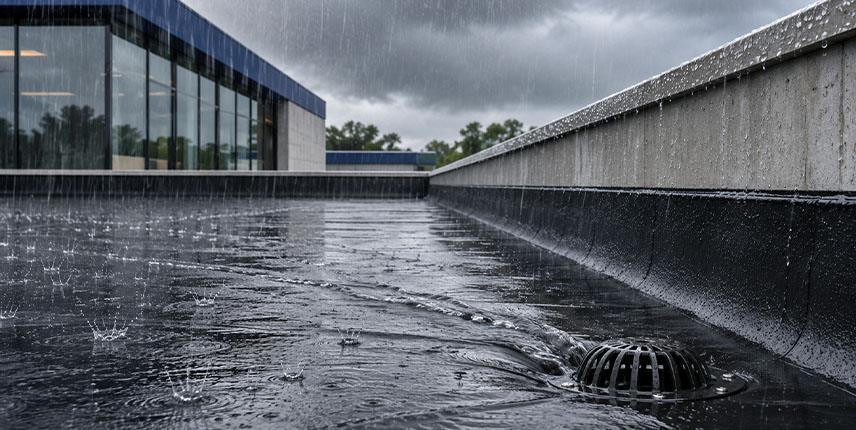
Roofs are continuously exposed to rainfall, sunlight, and temperature variations. Suitable waterproofing coatings help protect these surfaces against moisture penetration.
Bathrooms and Wet Areas
Corners, floor to wall connections, and pipe surroundings are particularly vulnerable to water infiltration. The application of liquid waterproofing materials can make it easier to cover these critical areas.
Foundations and Underground Structures
Foundations and basement walls may be exposed to moisture in the surrounding soil. Selecting an appropriate waterproofing system and applying it correctly are essential for protecting these structures.
5. Berseal SP1: A Modern Approach to Waterproofing
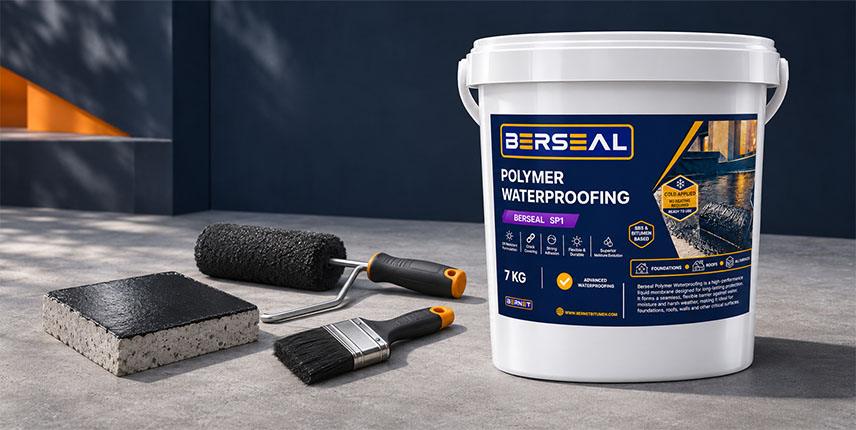
Berseal SP1 is a polymer modified bitumen waterproofing product developed by Bernet Pars Bitumen, based on SBS polymer technology.
It is designed to provide a flexible and continuous protective coating for building surfaces against moisture penetration.
Key features of Berseal SP1 include:
- Cold Applied: No heating or torch application is required.
- Seamless Coating: Creates a continuous protective layer without membrane joints.
- High Flexibility: Offers elongation properties that help accommodate surface movement.
- Strong Adhesion: Provides adhesion to suitable horizontal and vertical surfaces.
- Easy Application: Can be applied using a brush, roller, or trowel.
- UV Resistance: Provides resistance to ultraviolet exposure.
According to the published technical specifications of Berseal SP1:
- Minimum Elongation: 1000%
- Minimum Elastic Recovery: 75%
- Minimum Softening Point: 85°C
- Approximate Drying Time: 1–3 days
Actual drying time may vary depending on coating thickness, temperature, and environmental conditions.
6. Important Considerations Before Waterproofing Application
Even high-performance waterproofing materials require proper surface preparation and application to achieve their intended performance.
Before applying polymer waterproofing materials, several important considerations should be addressed:
- Surface Preparation: The substrate should be clean and free from dust, grease, and contaminants. Its moisture condition must comply with the product instructions.
- Substrate Inspection: Cracks, irregularities, and damaged areas should be inspected and repaired before application.
- Proper Application Tools: The material can be applied using a brush, roller, or trowel.
- Technical Guidelines: Application thickness and consumption rates should follow the product’s technical data sheet and project requirements.
- Adequate Drying Time: The recommended drying period should be observed before exposing the surface to water or applying subsequent layers.
Conclusion: A Smarter Approach to Building Protection
Advances in polymer technology are transforming the waterproofing industry by introducing materials designed for improved flexibility, easier application, and continuous surface protection.
SBS polymer-modified bitumen waterproofing products are an option worth considering for projects where coating continuity, flexibility, and application efficiency are important.
Berseal SP1, developed using SBS modified bitumen technology, offers a modern approach to waterproofing and protecting building surfaces.
For technical information, product specifications, or assistance in selecting the right solution for your project, contact the Bernet team.
Berseal | Engineered Through Technology. Built for Protection.